Monday, 28 March 2011
Tuesday, 22 March 2011
Blog Task: Identity - Constructing the Other

Othering is more subtle in The Guardian than perhaps in tabloids, and I'm not sure it is fully intentional- but it occurs nonetheless. This in itself is a reflection on the audience. Because the audience believe they are more informed than a tabloid reader, the paper encourages this belief by allowing them to feel superior by purposely making gimmicks like othering more subtle, and using Standard English rather than slang.
 I noticed this before I fully analysed it and attributed it to othering; the headline 'Europeans are liberal, anxious- and don't trust politics' infers the idea that we are separate to Europe. The truth is that we are geographically part of Europe, and of course one of the big political players in Europe; even if at times we like to pretend we are still a superpower in our own right. I think this article seems to back that up to some extent also. It speaks as if the UK is an independent entity not part of Europe.
The idea of it being 'the other' is reinforced by the Sandals advert adjacent. Offering us the chance to visit these 'Europeans' suggests they are there as the other to go see/visit, but not one of us.
One of the other places where I have witnessed othering is in the features on Japan considering the incredibly positive adverts alongside them.

A more intrinsic connection is demonstrated on the page to the right. The article discusses how some people in Japan have no power or communications and are completely cut off, while Sky immediately offers us an unlimited lifestyle in terms of our access to communications. It gives us the illusion of completeness, as we appear to have everything in abundance just because we are in a better position than those in Japan.

Thursday, 17 March 2011
Blog Task: Sustainability and Capitalism
 Sustainability is a inter and intra generational level in various spheres of society, such as economic or environmental. It is ideologically a communal concept according to Balser (2008). O'Riordan (1998) describes how sustainability is a process about 'coming to terms with sustainability in all its deeply rich ecological, social, ethical and economic dimensions'.
Capitalism is the operation of a laissez-faire economy, a free market, where the individual is free to pursue wealth accumulation for their benefit. Of course the vital fact here is that whatever one gains however, is at a loss to another. Capitalism constantly fails to create wealth globally therefore- it only allows places and people to succeed at the cost of others. Periodically it will demolish those successes to allow others to succeed too. Perhaps this is where capitalism starts to break that though, in that it always looks for new things to commodify. These are often labelled as 'opportunities' in today's society, but in reality it can be described as a crisis of capitalism. The creation of 'new markets' is one way in which people have tried to work with capitalism to achieve both economic and environmental sustainability, and this is discussed later in the analysis of emerging biofuel markets.
 Because capitalism is always looking for ways to expand, it results in mass destruction by oligopolies. Look at the rainforests, where deforestation driven by the capitalist interests of companies like McDonald's occurs on a scale where an area the size of Wales is razed annually. Capitalism also locks those living under capitalist regimes into that system- and those who defy it find it difficult to succeed- at least in economic terms. But potentially this is one problem in itself as capitalism teaches us that increased wealth accumulation equals increased happiness.
 The crises of capitalism can be embodied in the collapse of Northern Rock, where depositors had their money tied up into a risky capitalist system. Many people were on track to lose tens of thousands of pounds of their own money as a result, saved only by government intervention. Of course even this did not save the economy. Bail outs in the banks helped to part-secure some people's finances, but many people still lost out while the economy continued to shrink. This is a crises of capitalism- that our lives are essentially based on an unstable, risky system susceptible to boom and bust.
 This translates into the places we live. During the boom of the late 90s and first part of the 00s, things were looking up for Bradford and regeneration looked to be arriving here as it had in Leeds. As 2007 came, the crises of capitalism became apparent as a major brownfield site was left undeveloped in the city- with no realistic chance of any proposal coming to fruition any time soon. The site is still empty and the proposed shopping centre looks no closer to being built. Many people claim their lives and their city has been ruined by capitalists.
The way the UK government justifies investment is based on 'value for money'; but value is defined by our government as delivering economic benefits. This is a complete failure of policy and a rejection of their role to protect society, not act as an economic safeguarding agency. It is necessary to move away from this idea to achieve sustainability- other EU states have more positive policy in this area and thus have better environmental records, with higher recycling rates, high speed rail and more public transport use and more efficient housing. Value for money must be considered, but in relation to environmental and social benefits as well as economic benefits if we are to move towards a more sustainable lifestyle.
There are some solutions to this crisis, although I find all of them debatable. Balser discusses bio-diesel, or bio-fuel. Branded as a renewable energy source, bio-diesel requires plants to be grown for the sole reason of producing fuel, and requires more plants to be grown. It is also more expensive than normal fuel, so would take a lot of persuading for it to take off in a capitalist system. Balser later mentions that the BIOX plant is at the sacrifice of social equality too, so its introduction could tarnish sustainability in social fields, even if improving it in others.
Sustainability is not compatible with capitalism because it requires the product to be a commodity for it to work- which while working in favour of one place, works against another place or person. Having said this, I can't see any other way in which sustainability can be encouraged in the world at the moment. It must make economic sense for it to be pursued, and only once sustainable schemes are in place on a wide scale could it be pursued against economic favour.
Blog Task: Looking at Urban Spaces

 In reality, someone must 'manage' The Stray in order to realistically enforce these things, but it is difficult to enforce something when no-one can really decide what The Stray is- people hold different ideals and visions (representational space) of The Stray, which shows in the variations of practice here. This results in a variety of power struggles.
 The Stray, as legally greenbelt land, should represent a green lung and improve the environment. There is not much debate that it does this, but there has been an ongoing debate about whether to allow cycling on The Stray. Surely this should be encouraged by those that want to see The Stray remain an icon of environmental benefit, but there are those that say cycling on The Stray is another level at 'chipping away' at the unique protection of The Stray.
 The Stray is supposed to belong to the people of Harrogate, and while I think this still remains true in the majority, rules and regulations apply that I'm sure many would dispute. One of the most prominent examples must be barbecues, which like all fires, are banned on The Stray (except the annual bonfire).
We submit to the conventions on The Stray, although I do genuinely think The Stray represents a more liberal stance than smaller urban spaces; which may well be down to a realistic need to control movement.
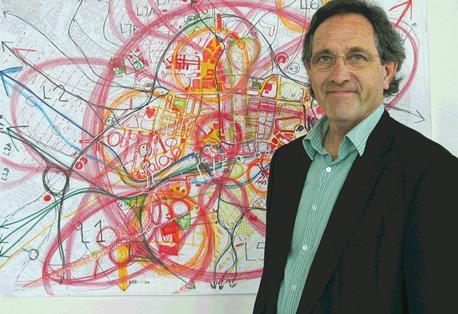
 Power struggles can be seen in Millennium Square strongly too. The concept of the space. representational space, was born out of city planners and thinkers who looked at representations of space, such as maps, and envisaged representational space out of it. For example, John Thorp (Civic Architect), studied and analysed city maps and recognised that essentially a car park, surrounded by civic buildings, could become a new heart for the city. Out of this, the idea for a major new public space was born.
Millennium Square questions whether any public space is really public. Millennium Square is almost entirely paved- and as such is as much of a money spinner as any of the surrounding buildings. The space was designed to be paved in order to host large events- over 7000 people can be held in Millennium Square for any event from paid concerts to football matches on the Big Screen.
Millennium Square also is closed to traffic. There are bollards and reinforced barriers at each entrance to the square, where roads once criss-crossed the space, to make sure traffic cannot enter the square. While this is surely positive, it does show how an authority (in this case Leeds City Council) controls the square.
There are some strong examples of control in the roads around the square. To the north of the square, disabled parking is in operation- although of course one could easily deny this (but face a fine). On the west side of the square, a complex one way system with contraflow cycle lanes are in place. All of this could be ignored if one wanted to. Having said this, it would be rather dangerous to do so. In these situations, the individuals are no longer individuals but just another car in the line of traffic. The three above points regarding Millennium Square show the council's interpretation of practice in the space, but certain sects of the public may have different ideals of the space and thus practice those things there- two examples are skateboarding or the annual water fight so hated by many.
One way in which I would commend The Stray over Millennium Square is that there are no fences or walls on The Stray so people are free to wander- and frequently do- off the path. So perhaps the transparency here is more genuine than in Millennium Square where it is little more than illusion as control is heavily enforced here.
Blog Task: Semiotics

The images of the ships when shown with captions become indexical as they could simply be iconic images of ships without the captions- and of course to further deconstruct this, the images are only copies or signifiers of the real thing anyway. The addition of captions however infers a link, and the reader works out that they signify something.
The images alone would also be synchronic, but when placed with text and a 'story', they become diachronic as the viewer imagines a narrative and can, without knowing the actual scene, work out what the before and after scenes would be.
The language is geared towards a certain audience; one assumes a right wing conservative sect. In a denotational sense, 'Argies' could be seen as simply an abbreviation of Argentinian, but of course there is a connotation of the other, the enemy. It can be seen as an almost racist slur, while 'our lads' implies the idea that we have some sort of personal relationship to them, as if they're our sons. There is a heavy implication that we are the superior, and they are the evil power. The caption labelled 'crippled' states this rather obviously by using the word 'super'.
The headline itself is not a 'real' word, and is rarely used in the actual situation- its almost a word that is ever used when trying to add a bit of humour to a cat and mouse situation.
The 'Battle For The Islands' image tries to reference back to wartime posters in the typography and layout used. There is a wartime connotation that many of that generation would remember.
A convention of The Sun, demonstrated perfectly in this article, is the typography and how it is more than just text. 'GOTCHA' is written in uppercase, bold and condensed- it has impact to it. As typography is an indexical representation of a voice, this implies a confident, superior, loud voice- exactly the sort of voice you would imagine a proud person (or in this case, the UK) saying with conviction to a lesser enemy, in this case Argentina.
'Union Boycotts War' paints the unions as not just against the war, but against our pride and Britain due to the diegetic nature of the page.
Everything on this front page relates to the Falkland War except for the footer. As the article itself is so positive, I would not be hesitant to argue that the reader would feel particularly optimistic after reading the article then see that they could win £50,000 on Bingo, and be more likely to look at page 20 than if they were to had read a depressing article.
Monday, 17 January 2011
Blog Task: Essay Ideas - Hyperreality in Contemporary Retail
Introductory Points
- Hyperreality is embodied in simulacra which takes centre stage on the modern high street
- Simulacra drives the high street and people's desire for commodities
- Hyperreality exists on the high street outside of simulacra also though, in more subtle ways such as the way it is communicated to the consumer (such as the shopping experience itself)
- Sign values reign on the high street
- Oligopolies are masked behind a friendly high street facade that presents them as community resources
Baudrillard, J (1970), 'The Consumer Society', London, SAGE
A good insight into the overall situation of how the modern consumer submits to hyperreality
P64
- Sign Exchange Value operating, not a use value
- Hyperreal ethics- a belief in a statement of values
Baudrillard, J (1994), 'Simulacra and Simulation', Michigan, University of Michigan
Further analysis of hyperreality and how it is embodied in commodified products
Debord, G (1967), 'The Society of the Spectacle', New York, Zone Books
Guy Debord's take on how society revolves not around each other, but around the hyperreality associated with products
Observations regarding American Apparel
P12
Observations regarding American Apparel
P12
- An immense accumulation of spectacles
- Operates on the basis of images & signs
Eco, U (1986), 'Travels in Hyperreality', London, Pan Books Ltd
Umberto Eco looking at the progression of hyperreality and how it has risen in importance in relation to the rise of capitalism
The Hyperreal Environment: Abercrombie & Fitch
- Dark shop, coloured lights, loud music, employed dancers- resembles a club that puts the mind into a hyperreal gear. The reality is that the 'party goer' is a consumer, spending real money.
- Upper Right: Queueing to get into Abercrombie and Fitch, London

Marshall McLuhan talking about communication and how hyperreality exists within that; 'the medium is the message'
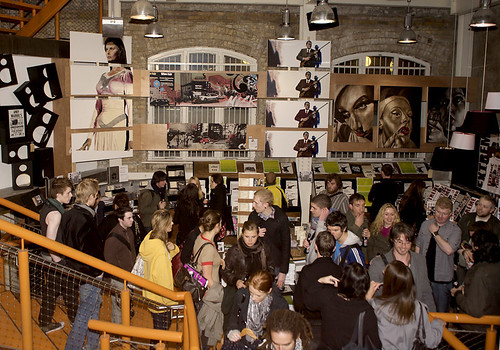 Right: An image of a student lockdown in Urban Outfitters, where art from local colleges is displayed giving the feeling of a community hub. Students buy into the hyperreality by thinking they are at a sort of party when actually they might as well be in Primark or Tesco at the end of the day.
Observations regarding Urban Outfitters
- The medium is the message (Mcluhan, 1964) can be applied to:
- UO's use of Facebook as a 'friend'
- UO's student lockdowns; 'parties'
- UO's art & music events, that appear to put them onto the same level as a gallery or cutting-edge music venue
- Independent music played in store
- All these things add up to result in a pseudo-individualism (Adorno, 1941) in the consumer
Observations regarding Adidas Originals
Baudrillard, J, 1983, 'Simulations', P96, unknown, USA
- Objects become undefined simulacra one of the other
- Origin no longer a concern
- Never need to be counterfeited (although sign exchange value means they are)
The intricacies taking place here can be partly summed up by the thoughts of Debord, who states that 'we live our lives through watching the lives of others, so our lives become these lives we watch- a false life.' (Debord, 1967). He elaborates; 'the loss of quality is so obvious at every level, from the objects it lauds to the behaviour it regulates merely echoes the basic traits of a real production process that shuns reality. The commodity form is characterised exclusively by self equivalence- it is exclusively quantative in nature. The quantative is what it develops and it can only develop within the quantative.' (Debord, 1967)
In other words, once we enter into the inevitable life of observing others, we become psychologically imprisoned;locked into a cycle where 'tastes' (that are mostly false), can only develop within themselves- it s the fashion that sets trends and we live at the pace of objects (Baudrillard, 1970).
Other interesting bits in 'The Consumer Society'- potential tangents though.
- P49 Happiness has to be measurable; IKEA- 'Happiness Inside'
- P64 advertising draws on relations to others' American Apparel ads
Notes: Globalisation, Sustainability and the Media
Capitalist vs Socialist
Standford Encylopedia of Philosophy
McLuhan- The Global Village, Understanding Media
McDonaldsisation
The age of no alternative
Jihad vs McWorld
Oligopolies
Funding
Ownership
Mr. Lunchbreath: Greenwashing
Standford Encylopedia of Philosophy
McLuhan- The Global Village, Understanding Media
McDonaldsisation
The age of no alternative
Jihad vs McWorld
Oligopolies
Funding
Ownership
Mr. Lunchbreath: Greenwashing
Notes: Identity
Identity- who we are and who we perceive ourselves to be. Our subjectivity.
- Where and how you are brought up
- Culture
- Education
Expressions of Identity
- Fashion
- Culture and Music
- Attitude
- Profession and/or job
- The way you speak
Identity is a dialogue between us and the world. Identity is a multi-determined battleground.
Stuart Hall
- Inventor of cultural studies
- Culture is the framework within which our identities are formed
- Production, ie what you produce, emits identity
- Representations are stereotypes
- Consumption is what we buy
- Regulation- like a boss and employee
Jacques Lacan: Identity Formation
- Hommelette: 'mirror stage'
- Sense of self is false as its an illusion of wholeness. Receiving it from others.
- Our own subjectivity is fragile.
Construction the 'other'
- Relies on the assumption of opposition and radical otherness
- Perpetuate negative stereotypes
Theories of identity
- Pot modern theorists disagree with essentialism
Social Constructivism is identity constructed from society- a series of facades.
Notes: Semiotics

A sign is the vehicle of meaning
What is semiotics?
The study of signs; born out of linguistics. The study of how things give meaning, not what things mean which is symbolism.
Sign Types
Iconic- e.g a photo, where there is an obvious explicit link
Indexical- e.g smoke being the sign of a fire. It is inferred and can be worked out.
Symbolic- e.g a flag where there is no link at all and it is convention. It has to be learn and codified.
Semiotics is based on codes. It works on cultural convention. Linguistics operate, e.g d o and g = dog which is a signifier of the signified, a dog. Culture operates like a language.
Everything we can analyse as text.
Denotations are the obvious analysis- e.g suit.
Connotations are the linked analysis- e.g businessman
Myth- green and pleasant land (Constable).
Synchronic vs Diachronic
Diachronic: Time based, evolutionary, chain of events, syntagmatic structure.
Synchronic: Snapshot, one instant, instant, paradigms (paradigmatic)
Metaphor vs Metonyms
Intertextuality
Saussure (top right)
Signifier denotation: trophy
Signified connotation: winning
Thursday, 25 November 2010
Lecture Notes: Communication Theory
 Laswell Theory of Communication
Shannon-Weaver model, including feedback (not on model).
Three levels of potential communication problems
Level 1: Technical
Accuracy
Systems of encoding and decoding
Compatability of systems.need for specialist equipment/knowledge
Level 2: Semantic
Precision of language
How much of the message can be lost without meaning being lost?
Which language to use?
Level 3: Effectiveness
Does the message affect behaviour the way we want it to?
What can be done if the required effect fails to happen?
Communicator A > Encode with language > Message with medium > Receive and Interpret > Communicator B > Encode with language > Message with medium > Receive and Interpret > Communicator A
BARB: Broadcasters Audience Research Board
Audience categories such as men, children, adults
Audience sub categories/demographics
A: Upper Middle- lecturers
B: Middle- Teacher
C1: Lower Middle- Call Centre worker
C2: Skilled working- Plumber
D: Working- Unskilled workers
E: Bottom- Relying on state
Semiotics
Semantics addresses what a sign stands for
Syntactics: the relations among signs
Pragmatics: how to apply the theory- making it practical.
Systems theory is interdisciplinary
Semiosphere
Semiotics are languages. Medicine boxes, for example, all look similar and can be recognised as having their place in a pharmacy.
Barthes grammar of narrative
Levi Strauss ethnography and semiotics
Lacan relates semiotics to psychoanalysis
Trainers
Trainers being bought to send signs not to be practical running or exercise shoes. They had become a sign- people trying to send a signal.
Limitations of semiotics
Prioritise structure over usage
Semiotics
Panzani Image code
Building codes
Danger, place and Airport analogy. How do we decode this?
Semiotics presumes that readings are clear.
Gestalt Psychology: Psychotherapist/Psycho The Rapist
Changing patterns are key. Why are we in tune to this? A change in the pattern is noticed.
The Phenomenological Tradition
Phenomenon refers to the appearance of an object
Authentic human relationships lack, but are needed
The embodied mind
Body and mind are joint
Physiological classification of coding and encoding
faces and emotions. Animators use prosthetic protractor. Phenomenological thinking.
Interpretation
the process of interpretation is central
What is real for the person
Rhetoric
Hyperbole
Irony
Personification
Art of persuasion
Socrates/Plato.
Rhetoric used for power in males in ancient civilisations when speaking at senate. Problematic though as used by dicators.
Pictures without con(text) are meaningless. They need to be anchored to mean anything.
Metaphor: Memory Theatre.
Socio Psychological
Constitutive
Cognitive
Biological
Socio Cultural Tradition
Yorkshire ISP: better because of culture
Cultural traditions work out interactively in communication
Accents mean something
Mediate culture
Socio critical
Christ sensitive analogy.
Tuesday, 23 November 2010
Lecture Notes: The Gaze
Call of Duty
1st Person & 3rd person options- the 1st person is preferred.
What causes us to engage with hurt? Power & gameplay.
Pyschoanalysis is the analysis of the options and controls that we choose in life.
Laura Mulvey
Visual pleasures - Narrative Cinema
Scopophilia
- Pleasure of looking at others bodies as object (Freud)
- Perversions and objects
Narcissistic identification
Mirror stage: Jacques Lacan
-A childs own body is less perfect than reflection e.g Radioactive Man/Comic Book Guy
Structures of looking
-Cinema thrives on this
Male is not to be looked at & represents power
Suture
-Spectators look through eyes of the actors in the film
-Suture can be broken to make viewer feel guilty
Spectators gaze- looking at one
Intradiagetic gaze- looking at others in scene
Extradiagetic gaze- looking outwards e.g TV newsreader/break 4th wall
Etant Donnes- Being Give. Are we being given the power of the gaze?
1st Person & 3rd person options- the 1st person is preferred.
What causes us to engage with hurt? Power & gameplay.
Pyschoanalysis is the analysis of the options and controls that we choose in life.
Laura Mulvey
Visual pleasures - Narrative Cinema
Scopophilia
- Pleasure of looking at others bodies as object (Freud)
- Perversions and objects
Narcissistic identification
Mirror stage: Jacques Lacan
-A childs own body is less perfect than reflection e.g Radioactive Man/Comic Book Guy
Structures of looking
-Cinema thrives on this
Male is not to be looked at & represents power
Suture
-Spectators look through eyes of the actors in the film
-Suture can be broken to make viewer feel guilty
Spectators gaze- looking at one
Intradiagetic gaze- looking at others in scene
Extradiagetic gaze- looking outwards e.g TV newsreader/break 4th wall
Etant Donnes- Being Give. Are we being given the power of the gaze?
Blog Task: On Popular Music
Kylie Minogue: Can't Get You Out of My Head.
Can't Get You Out of My Head proves that 'the whole structure of popular music is standardised' (Adorno, 1941). It successfully manages to stick in people's heads because there are very few aberrations, and when they occur, it soon 'leads back to the same familiar experience'. One can fully know what to expect in the entirety of the track just from listening to the introduction. Adorno describes it as 'the whole is pre-given and pre-accepted'.
Adorno states that 'it is imperative to hide standardisation' and this is because 'the reality of individual achievement must be maintained'. In this instance for example, Kylie retains her individual image but is merely another cog in the wheel of Parlophone.
Woman as Object
Much like many of her videos, this video portrays Kylie as an object to be admired. The entire concept is based on a scopophilic pleasure.
In terms of beauty being dictated from men, is there any better example than Kylie's video for 'Slow'? There is a heavy spectators gaze with Kylie often in the emphasised centre of the shot.
Both of the videos shown above are almost so obvious in demonstrating the standardisation of popular music and displaying the woman as an object that one would be forgiven for thinking the videos are parodistic. Of course in truth, the tracks are not parodistic, they are simply pre-digested.
Can't Get You Out of My Head proves that 'the whole structure of popular music is standardised' (Adorno, 1941). It successfully manages to stick in people's heads because there are very few aberrations, and when they occur, it soon 'leads back to the same familiar experience'. One can fully know what to expect in the entirety of the track just from listening to the introduction. Adorno describes it as 'the whole is pre-given and pre-accepted'.
Adorno states that 'it is imperative to hide standardisation' and this is because 'the reality of individual achievement must be maintained'. In this instance for example, Kylie retains her individual image but is merely another cog in the wheel of Parlophone.
Woman as Object
Much like many of her videos, this video portrays Kylie as an object to be admired. The entire concept is based on a scopophilic pleasure.
In terms of beauty being dictated from men, is there any better example than Kylie's video for 'Slow'? There is a heavy spectators gaze with Kylie often in the emphasised centre of the shot.
Both of the videos shown above are almost so obvious in demonstrating the standardisation of popular music and displaying the woman as an object that one would be forgiven for thinking the videos are parodistic. Of course in truth, the tracks are not parodistic, they are simply pre-digested.
Friday, 12 November 2010
Blog Task: The Panopticon

In a metaphorical sense, this is a devolution of power. Foucault states that ‘each street is placed under the authority of a syndic, who keeps it under surveillance’ (Foucault in Discipline & Punish, 1977, P61). In this case, a metro network has been placed under the authority of a syndic.
 He also mentions that ‘the crowd is abolished and replaced by a collection of separated individualities’(Foucault in Discipline & Punish, 1977, P65). Perhaps formerly, commuters thought they could merge into one mass- now each is tracked as individuals.
It’s also a clear example of submitted power by the bearer; ‘the inmates should be caught up in a power situation of which they themselves are the bearers’(Foucault in Discipline & Punish, 1977, P65). No-one is forced to get an Oyster card, but an increasing majority submit to it.
Oyster has enabled outer stations to not have ticket barriers; instead penalties ‘may’ be incurred if you do not touch in/out; comparable to the Foulcauldian idea that ‘there are no more bars, chains or heavy locks’(Foucault in Discipline & Punish, 1977, P66).
Oyster claims to be an easy fare paying system when actually it cannot be linked to any specific use. Foulcault says a panopticon is a figure of political technology that may and must be detached from any specific use. Through Oyster’s party-political foundings (a Livingstone project) used for other purposes (security/tracking/surveillance) and its obvious use, it is a clear example of a panoptic method of control.
Foulcalt, M (1977), Penguin Books Ltd, London
Monday, 22 March 2010
The Digital Age

This blog has discussed modernism, post modernism, the document, media, art and advertising among other things; however they have all been studied in relation to ‘traditional’ mediums. Traditional here is used in the sense that it is not a design of the digital era.
We are at the dawn of perhaps the biggest revolution in history that is already changing not just the way we communicate, but the way we live, work and think. It is critical to recognise this change in relation to design otherwise we risk losing out to the fast changing world.
The BBC is currently running a season called ‘Superpower’, asking the question ‘is the internet the most powerful thing the world has ever seen?’ A simple answer would be no. At a first glance, one would analyse the internet alongside other forms of media and simply as another new thing in society. On closer inspection however, it is hard to think of something that comes even close to the power of the internet.
For the very first time in history, anybody can publish anything, to anyone, anywhere. And most incredibly, it can be done within seconds. There are some who have yet to acknowledge this, but the sooner they do, the better. Humans can embrace the internet to pursue whatever goal they want in life, but equally it can be used for bad.
It is changing the way we live. We are connected twenty four hours a day. When we are not at home on the computer, we are carrying mobile internet around with us on our phones. When this is related to design, this gives designers incredible power to try new concepts. Designers are already working on many new ideas in this area. One example is Google’s Street View, where companies are able to pay for virtual advertising space on billboards on street view. In real terms, this literally doubles the amount of physical advertising space in the world. Another concept being tested is demand-driven adverts; billboards that via a camera using technology similar to face recognition can see the brand on the bag one is carrying, and display an advert for that retailer.
It is changing the way we work. Many teachers and lecturers still advocate libraries as the best place to research, whereas those of the younger generations turn to the internet before any other method. How does one reach a balance; if there is one at all? We are also not commuting to workplaces as much as we once were. The internet has opened up ebusiness, where one can host online meetings and conferences while each person works from home. It is increasingly the case that an employee will only have to visit the office once a week, if ever.
It is also changing the way we think. Younger generations no longer associate themselves with their county, but with the network they are part of on Facebook. They no longer associate themselves with their country, but the online community they are part of, such as YouTube. Friends have been redefined; ‘friends’ means the number of connections you have- even if it is to total strangers because no-one truly has thousands of friends. Our concentration spans have shortened too. We do not think linearly anymore, but associatively. Surfing the web using hyperlinks hopping around information is a completely different way of learning to reading a book from cover to cover, working through chapters.
Upcoming designers cannot afford to miss out on this revolution. They must embrace these changes in society in order to allow their designs to be understood by society. The critical thing about the internet is that it is not just another form of communication; it is something that is changing our very humanity.
Banksy: Image Analysis

This Banksy classic conveys a strong political point regarding to the Palestine Wall.
The initial reaction is thought-provoking and evokes the feeling of anger. Banksy has cleverly used faith, an issue personal to many, as a political tool. The use of Mary & Joseph drives the issue home to the western world, where the large majority of people are Christian (or at least are ‘culturally Christian’).
It is interesting how there is a metaphorical juxtaposition in that Mary & Joseph, and by extension Christianity, represents things like peace and love, where as the wall is a product of hate and division. In this image, the wall prevents the good intentions from being carried out. It therefore motivates the viewer to act on the issue, even though there is no stated intention to do this on the image itself; it speaks for itself.
There is also a visual juxtaposition between the old/traditional and new/modern. A very traditional picture-perfect scene is depicted in oil paints, yet this has been purposely vandalised by a modern monstrosity cutting through the image. There is the use of modern English as graffiti on the wall, as well as strong geometric shapes coloured shades of grey. The construction of the image is a complete reflection upon society.
In many ways, the picture is realistic and depicts an event that many believe occurred. In other ways however, the image represents the negation of humanity that the barrier represents. One would assume that ‘the grass is greener on the other side’ as the star is on that side, however the reality is that life is not particularly better on that side- and in fact if one is to study the nativity, life is certainly worse in Bethlehem. It is therefore intriguing that the image provokes feelings of anger and the urge to tear the wall down in order to create peace, despite the reality being somewhat different to what we want to believe. The image makes us believe what we want to believe, rather than what is true.
One may read into the position of the Shepherd in the image too, and question why he is there when the wise men are not. Banksy is attempting to make a further political point, demonstrating that it always has been, and always will be, the poorest and most disadvantaged in society that suffer from the evil in the world. It could be assumed that the wise men had ‘arrangements’ to get through the barrier, just as those in positions of importance today have.
It is indeed a powerful image that the majority of people can relate to in various ways. It seems that this painting is the peak of Banksy’s series of works relating to the Palestine Wall, and he has created an incredibly successful piece of work here to summarise his feelings.
Saturday, 13 February 2010
Postmodernity
Postmodernism is often used to poke fun at things. It is a fusion of contrasting styles, and asks ‘why do we have to be these things anyway?’ Keywords:
• Innovative
• Individualism
• Progress
• Purity
• Experimentation
• Originality
• Seriousness
Postmodern Condition:
• Exhaustion
• Pluralism
• Pessimism
• Disillusionment with total knowledge
Modernism: Expression of modern life
Postmodernism: Reaction to modern life
Origins
1917- German writer Rudolph Pannwitz spoke of postmodern men. 1964- Leslie Fielder.
Is the Postmodern a culture reserved for the rich/elite?
Visual culture: 1990s- popular
‘After Modernism, historical era following modernism; contra-modern’.
Late Capitalism, Stylist Eclecticism
The ‘global village’ phenomena referring to globalisation and the homogenised world
1977- The Language of Postmodern Architecture
Jencks: 1532 15th July 1972- demolition of the Pruitt-Igoe development St. Louis. Le Courbusier- not consistent with the diversity of human life.
Utopia: Postmodernism rejects this idea. It also rejects the idea of technological determinism.
Park Hill Flats, Sheffield (1960).
AT&T Building, NYC - Philip Johnson 1982
Guggenheim, Bilbao – J F Lyotard
‘The Postmodern Condition’ 1979 ‘increduity towards totalising belief systems results in crisis in confidence’.
There is a directionless society which is a reflection of the simplified aesthetic, utopia and truth to materials.
Roy Lichenstein
Las Vegas
Postmodern city; the idea that it has given up in trying, but is also a city that pokes fun.
Claves Oldenburg – Depped Cave 2001 Koln
Postmodernism – Dystopia
Red painting- Brushstroke 1965 Lichenstein
Jenny Holzer – uses adverts to make art
High art/low art divide crumbles.
Memphis Group
Crisis in Confidence: questioning old limitations. Freedom and new possibilities emerge.
Conclusion is disputed, but most agree PoMo questions conventions and encompasses multiple aesthetics.
• Innovative
• Individualism
• Progress
• Purity
• Experimentation
• Originality
• Seriousness
Postmodern Condition:
• Exhaustion
• Pluralism
• Pessimism
• Disillusionment with total knowledge
Modernism: Expression of modern life
Postmodernism: Reaction to modern life
Origins
1917- German writer Rudolph Pannwitz spoke of postmodern men. 1964- Leslie Fielder.
Is the Postmodern a culture reserved for the rich/elite?
Visual culture: 1990s- popular
‘After Modernism, historical era following modernism; contra-modern’.
Late Capitalism, Stylist Eclecticism
The ‘global village’ phenomena referring to globalisation and the homogenised world
1977- The Language of Postmodern Architecture
Jencks: 1532 15th July 1972- demolition of the Pruitt-Igoe development St. Louis. Le Courbusier- not consistent with the diversity of human life.
Utopia: Postmodernism rejects this idea. It also rejects the idea of technological determinism.
Park Hill Flats, Sheffield (1960).
AT&T Building, NYC - Philip Johnson 1982
Guggenheim, Bilbao – J F Lyotard
‘The Postmodern Condition’ 1979 ‘increduity towards totalising belief systems results in crisis in confidence’.
There is a directionless society which is a reflection of the simplified aesthetic, utopia and truth to materials.
Roy Lichenstein
Las Vegas
Postmodern city; the idea that it has given up in trying, but is also a city that pokes fun.
Claves Oldenburg – Depped Cave 2001 Koln
Postmodernism – Dystopia
Red painting- Brushstroke 1965 Lichenstein
Jenny Holzer – uses adverts to make art
High art/low art divide crumbles.
Memphis Group
Crisis in Confidence: questioning old limitations. Freedom and new possibilities emerge.
Conclusion is disputed, but most agree PoMo questions conventions and encompasses multiple aesthetics.
Friday, 12 February 2010
The Document
Documentary Practice
A photographer in a way is perpetuated peace. The images are not just documenting/recording, but an intervention in a human agenda.
Joseph Nicéphone Niépce (1826)
View from a window at La Gras. The ability to capture the world brings an element of responsibility to the photographer as they record reality. James Nachtwey says we don’t just need to record but we need to expose the world. ‘These events I have recorded should not be forgotten or repeated’/
Frances Frith (1857) ‘Entrance to the Great Temple’
A subjective western depiction of Africa.
William Edward Kilburn ‘The Great Chartist Meeting at the Common’ (1848)
Hallmark of neutrality- no-one looking at camera and a bird’s eye panorama. But because the photo is staged, it is not neutral.
Roger Fenton (1855) ‘Into the Valley of the Shadow of Death’
A romanticised scene of war.
Cartier- Bresson
Capture a split second that represents human condition. A ‘sound-byte’ of the situation. Aesthetics, such as the ballerina, are important.
Jacob Riis (1888) ‘Bandits Roost’ / ‘A Growler Gang in Session (Robbing a Lush)’
Photograph real life and squalor. Not real though- all people in the photo are looking at the camera; they are all aware of the camera. It is a construction, not a snapshot of slum life.
Lewis Thine: Russian Steel Workers- Homestead 1908, Child Labourers in glassworks, Indiana (1911).
FSA Photographers 1935-1944
Department of Farm, Security and Administration. Roy Striker was the director. The government had to try and sort out migration problems.
Photograph as both photo journalism and emotive lobbying tool. Photographers looking for a certain response. Photographs are invalid as records of history.
Margaret Bourke-White ‘Shore Coppers Home’ (1937)
• Elicit and emotional response
• Peasant, child and dog
• Consumer culture images as wallpaper
‘Migrant Mother’ Doretha Lange (1936)
Mimics a residential shot to give impression that the subject is thinking ahead.
FSA- for a government agency, not individual photographers. Although the archive photos are mostly neutral, they are rejected by the FSA. FSA don’t want the ‘real’ reality but they want to create an image of the reality they want to expose.
Walker Evans- Graveyard Houses & Steel Mill, Bethlehem Pennsylvania (1935)
Scientists used photographer as a means to document people. In this case, photography is hiding its real agenda. Images supposedly used for science but not really.
Cesore Lombroso ‘Portrait of Melancholy’ / ‘Portraits of Italian & German Criminals’ (1889)
Theory: If you collect several photos of criminals, it will create the perfect image of criminality and you can judge criminals by their looks.
Robert Capa 1945- Normandy Landings
Neutral because of the subject. Famous for a blur- did he do this purposely later?
Magnum Group
1947 founded Cartier-Bresson & Capa.
Ethos of documenting the world and its social problems as well as internationalism and mobility.
Roberta Capa- 1939 ‘The Falling Soldier’ 1936
Seems staged; could be fact but really?
Nick Ut (172) ‘Accidental Napalm Attack’
Don McCullin (1968) ‘Shell Shocked Soldier’
Don McCullin was banned from going to the Falklands during the war because he would have produced negative images.
Robert Hoeberle (1969)
Took pictures of people about to be shot because he had given up trying to stop it/accepted he was part of the machine.
William Klein, St. Patrick’s Day Fifth Avenue (1955)
He accepts the photography is always somewhat staged, so he makes it explicit rather than trying to hide it and keep it a secret.
Bernd and Hilda Beeher
To try and remove subjectivity/aesethetics, they set rules on how to take pictures so they are netural and just record.
Conceptual Art
Richard Long (1981) A long line and tracks in Bolivia, tries to make art that can’t be bought or sold by trying to make a point- not trying to be bought and commissioned in galleries.
Bertol Brecht (1931): ‘You can’t capture reality’.
Allan Sekula- Fish Story. Lukacs ‘Theory of Novel’.
Narration vs. Description
In this book, there are essays and images- not just photos. It tries to represent reality as widely and neutrally as possible.
Andreas Gursky (1999) ’99 cent’
Jeff Wall (1992) ‘Dead Troops Talk’
Gillian Wearing (1992-1993) ‘Signs That Say What You Want Them To Say’
Jeremy Deller ‘The Battle of Orgreave’ (2001) Miners Strike.
Recreate/reconstruction of a scene. Channel 4/UK Art Angel with director Mike Figgis.
John Harris
Everyone has cameras now- we are all powerful. No need for Magmum- there is a reversal of power.
A photographer in a way is perpetuated peace. The images are not just documenting/recording, but an intervention in a human agenda.
Joseph Nicéphone Niépce (1826)
View from a window at La Gras. The ability to capture the world brings an element of responsibility to the photographer as they record reality. James Nachtwey says we don’t just need to record but we need to expose the world. ‘These events I have recorded should not be forgotten or repeated’/
Frances Frith (1857) ‘Entrance to the Great Temple’
A subjective western depiction of Africa.
William Edward Kilburn ‘The Great Chartist Meeting at the Common’ (1848)
Hallmark of neutrality- no-one looking at camera and a bird’s eye panorama. But because the photo is staged, it is not neutral.
Roger Fenton (1855) ‘Into the Valley of the Shadow of Death’
A romanticised scene of war.
Cartier- Bresson
Capture a split second that represents human condition. A ‘sound-byte’ of the situation. Aesthetics, such as the ballerina, are important.
Jacob Riis (1888) ‘Bandits Roost’ / ‘A Growler Gang in Session (Robbing a Lush)’
Photograph real life and squalor. Not real though- all people in the photo are looking at the camera; they are all aware of the camera. It is a construction, not a snapshot of slum life.
Lewis Thine: Russian Steel Workers- Homestead 1908, Child Labourers in glassworks, Indiana (1911).
FSA Photographers 1935-1944
Department of Farm, Security and Administration. Roy Striker was the director. The government had to try and sort out migration problems.
Photograph as both photo journalism and emotive lobbying tool. Photographers looking for a certain response. Photographs are invalid as records of history.
Margaret Bourke-White ‘Shore Coppers Home’ (1937)
• Elicit and emotional response
• Peasant, child and dog
• Consumer culture images as wallpaper
‘Migrant Mother’ Doretha Lange (1936)
Mimics a residential shot to give impression that the subject is thinking ahead.
FSA- for a government agency, not individual photographers. Although the archive photos are mostly neutral, they are rejected by the FSA. FSA don’t want the ‘real’ reality but they want to create an image of the reality they want to expose.
Walker Evans- Graveyard Houses & Steel Mill, Bethlehem Pennsylvania (1935)
Scientists used photographer as a means to document people. In this case, photography is hiding its real agenda. Images supposedly used for science but not really.
Cesore Lombroso ‘Portrait of Melancholy’ / ‘Portraits of Italian & German Criminals’ (1889)
Theory: If you collect several photos of criminals, it will create the perfect image of criminality and you can judge criminals by their looks.
Robert Capa 1945- Normandy Landings
Neutral because of the subject. Famous for a blur- did he do this purposely later?
Magnum Group
1947 founded Cartier-Bresson & Capa.
Ethos of documenting the world and its social problems as well as internationalism and mobility.
Roberta Capa- 1939 ‘The Falling Soldier’ 1936
Seems staged; could be fact but really?
Nick Ut (172) ‘Accidental Napalm Attack’
Don McCullin (1968) ‘Shell Shocked Soldier’
Don McCullin was banned from going to the Falklands during the war because he would have produced negative images.
Robert Hoeberle (1969)
Took pictures of people about to be shot because he had given up trying to stop it/accepted he was part of the machine.
William Klein, St. Patrick’s Day Fifth Avenue (1955)
He accepts the photography is always somewhat staged, so he makes it explicit rather than trying to hide it and keep it a secret.
Bernd and Hilda Beeher
To try and remove subjectivity/aesethetics, they set rules on how to take pictures so they are netural and just record.
Conceptual Art
Richard Long (1981) A long line and tracks in Bolivia, tries to make art that can’t be bought or sold by trying to make a point- not trying to be bought and commissioned in galleries.
Bertol Brecht (1931): ‘You can’t capture reality’.
Allan Sekula- Fish Story. Lukacs ‘Theory of Novel’.
Narration vs. Description
In this book, there are essays and images- not just photos. It tries to represent reality as widely and neutrally as possible.
Andreas Gursky (1999) ’99 cent’
Jeff Wall (1992) ‘Dead Troops Talk’
Gillian Wearing (1992-1993) ‘Signs That Say What You Want Them To Say’
Jeremy Deller ‘The Battle of Orgreave’ (2001) Miners Strike.
Recreate/reconstruction of a scene. Channel 4/UK Art Angel with director Mike Figgis.
John Harris
Everyone has cameras now- we are all powerful. No need for Magmum- there is a reversal of power.
(Art), the Mass Media & Society
1. Characteristics of new digital media
2. Definition of, and critical look at, mass media
3. Relationship between art and mass media
‘Late Age of Print’- Media Theorist Marshall McLuhon
He believes that the age of print begins in 1450 with the invention of the printing press by Gutenburg. The press brings a new society. Knowledge becomes more freely available and more people can get it as it is wider circulated, not just to those few.
Computer Literacy
We can now consumer knowledge but also distribute it. Press has changed the way we read and engage with the world.
Ebook
• Are ebooks democratic?
• Will they replace books?
The digitisation of literature changes the way we think & read. Ebooks allow the reader to subvert the dogmatic authority of the authority. This is because the reader can ‘control’ the way they read. The reader can take on the role of the author.
Computer Media
Hypertext: ‘Surf through knowledge’. Hypermedia problems:
Hypertext can allow you to ‘skip’ knowledge and skip through it. It gives you the sense you have read up on an issue well, but you have only touched upon it and some aspects of it. Schools support this because the learner constructs the learning.
Definition of Mass Media
Modern systems of communication and distribution supplied by relatively small groups of cultural producers, but directed towards large groups of consumers. I.e. A few people have control of most knowledge creation. The internet doesn’t fit with this however.
Critical Analysis of Mass Media
1. Superficial, uncritical, trivial. Little content, not much to learn. Re-iterated entertainment.
2. Viewing figures measure success. Nothing changes because of this.
3. Audience is dispersed.
4. Audience is disempowered. Makes the feeling that viewers have power such as the XFactor
5. Encourages the status quo- conservative. It encourages the popular consensus and doesn’t challenge.
6. Apathy. Can’t do anything to change the world- only watch.
7. Power held by a few motivated profit driven people- propaganda.
8. Bland, escapist and standardised.
Positives
1. Not all media is low quality
2. Social problems and injustice are discussed by the media
3. Creativity can be a feature of mass media
4. Transmission of high art reaches broader audience
5. Democratic potential
John A. Walker- Art in the Age of Mass Media
What happens to art when it is being filtered through the mass media and the ignorant can engage with it and criticise it.
Leeds 13- pretended to go on holiday. United Colours of Benetton; art into adverts.
Can art be autonomous? Can it exist on its own within a vacuum? Should art be autonomous?
Jackson Pollock- elitist art that is ‘above society’. Thomas Gow says art vs. media is untrue and art has always been linked to mass media. Pop art- art revelling its own relationship with mass media. Lichtenstein takes the piss out of high art- but it is still high art.
Warhol Green Coca-Cola bottles says something about the ‘same-ness’ of modern society- of how boring media is today. ‘Mask’ on Marilyn Monroe. Celebrity glamour is repeated and given to us consistently with all its imperfections.
‘Campaign Fatigue’
Images fed to us so much that we are insensitive to it. Art becomes a subject of mass media. The meaning of art is shifted. Art is claimed by society e.g Jackson Pollock- Stone Roses and L’Oreal – Piet Mondrian.
Always has been a relationship between mass media and art. Symbolic- media is better artists reciprocate.
Myra Hindley – Marcus Harvey 1995. 1997 in Sensation in London. Handprints make up Hindleys face. Our relationship with Myria is 100% concerned with the media. Attacked the press. Iconic connotation with evil. Meditation with media not subject.
2. Definition of, and critical look at, mass media
3. Relationship between art and mass media
‘Late Age of Print’- Media Theorist Marshall McLuhon
He believes that the age of print begins in 1450 with the invention of the printing press by Gutenburg. The press brings a new society. Knowledge becomes more freely available and more people can get it as it is wider circulated, not just to those few.
Computer Literacy
We can now consumer knowledge but also distribute it. Press has changed the way we read and engage with the world.
Ebook
• Are ebooks democratic?
• Will they replace books?
The digitisation of literature changes the way we think & read. Ebooks allow the reader to subvert the dogmatic authority of the authority. This is because the reader can ‘control’ the way they read. The reader can take on the role of the author.
Computer Media
Hypertext: ‘Surf through knowledge’. Hypermedia problems:
Hypertext can allow you to ‘skip’ knowledge and skip through it. It gives you the sense you have read up on an issue well, but you have only touched upon it and some aspects of it. Schools support this because the learner constructs the learning.
Definition of Mass Media
Modern systems of communication and distribution supplied by relatively small groups of cultural producers, but directed towards large groups of consumers. I.e. A few people have control of most knowledge creation. The internet doesn’t fit with this however.
Critical Analysis of Mass Media
1. Superficial, uncritical, trivial. Little content, not much to learn. Re-iterated entertainment.
2. Viewing figures measure success. Nothing changes because of this.
3. Audience is dispersed.
4. Audience is disempowered. Makes the feeling that viewers have power such as the XFactor
5. Encourages the status quo- conservative. It encourages the popular consensus and doesn’t challenge.
6. Apathy. Can’t do anything to change the world- only watch.
7. Power held by a few motivated profit driven people- propaganda.
8. Bland, escapist and standardised.
Positives
1. Not all media is low quality
2. Social problems and injustice are discussed by the media
3. Creativity can be a feature of mass media
4. Transmission of high art reaches broader audience
5. Democratic potential
John A. Walker- Art in the Age of Mass Media
What happens to art when it is being filtered through the mass media and the ignorant can engage with it and criticise it.
Leeds 13- pretended to go on holiday. United Colours of Benetton; art into adverts.
Can art be autonomous? Can it exist on its own within a vacuum? Should art be autonomous?
Jackson Pollock- elitist art that is ‘above society’. Thomas Gow says art vs. media is untrue and art has always been linked to mass media. Pop art- art revelling its own relationship with mass media. Lichtenstein takes the piss out of high art- but it is still high art.
Warhol Green Coca-Cola bottles says something about the ‘same-ness’ of modern society- of how boring media is today. ‘Mask’ on Marilyn Monroe. Celebrity glamour is repeated and given to us consistently with all its imperfections.
‘Campaign Fatigue’
Images fed to us so much that we are insensitive to it. Art becomes a subject of mass media. The meaning of art is shifted. Art is claimed by society e.g Jackson Pollock- Stone Roses and L’Oreal – Piet Mondrian.
Always has been a relationship between mass media and art. Symbolic- media is better artists reciprocate.
Myra Hindley – Marcus Harvey 1995. 1997 in Sensation in London. Handprints make up Hindleys face. Our relationship with Myria is 100% concerned with the media. Attacked the press. Iconic connotation with evil. Meditation with media not subject.
Advertising, Publicity & the Media
Mass Advertising
Times Square: A bombardment of adverts; the epitome of capitalism.
There are 11,000 new adverts per year, and 25 million print adverts per year.
Pop ups- they invade our lives.
Karl Marx 1818-1883: Communist Manifesto 1848
A Marxist would argue that we live in a commodity culture where we are governed by markets and materialism. In our capitalist culture, our identities are build upon commodities. What we own defines who we are. Stewart Ewen terms it ‘the commodity self’. Judith Williams says ‘instead of being identified by what they produce, people identify themselves through what they consume.
We perhaps believe in the commodity culture because the adverts lead us to believe that our lives will get better by it. CKI lead us to believe that buying perfume- aka flavour water- will turn us into sophisticated, sexy, popular people. Our purchases make us believe we are those things.
Traditional adverts used the virtues of the product to promote it. The Stanley Range ad says your life will be improved by a better cooker where as the Milady Pipe tries to attach a lifestyle to the pipe.
Commodity culture perpetuates false needs by bringing aesthetic innovation, planned obsolescence and novelty.
Aesthetic Innovation: iPod
If a product looks nicer, it becomes ‘needed’ because it is nicer.
Planned Obsolescence
Products in the commodity culture are designed to break so that you will feel you have lost something when you don’t have it, thus meaning you are compelled to buy more.
Commodity Fetishism
Advertising conceals the background history of products. Theorists would say that we know each other through the things we own rather than our genuine personalities. Our relationships are mediated through commodities.
Niked trainers are marketed as empowering females, but they are produced through sweatshops where females are slaves.
Reification
Products are given human associations. When we associated humans with commodities so much, the commidty gains a ‘human’ aspect and becomes a character. In the mini advert, the family are bounded by the car as it becomes part of the family. With this, people become less ‘human’ and are judged more like commodities. Rather than describing their personality, they describe their physicial attributes. Lip Gloss- becomes sex.
Frankfurt School 1923
Herbert Marcuse- One Dimensional Man: Commodity Culture stops us seeing things in several ways.
John Berger- Ways of Seeing: Advertising shows us we become richer when paradoxically we become poorer. Both of the images in adverts show we are inadequate until we gain the product.
Painting
A painting of a guy who is identifying himself through the trappings of their lives; their commodities.
Adverts are tricks, but there are positives; economy, subsidising the media quality, stereotyping. But it makes us unhappy with what exists, it manipulates people, encourages addictive, obsessive and acquisitive behaviour. It distorts the language and encourages bad grammar. It is specially indoctrinated in children because it encourages us to buy unhealthy products. It encourages people to deplete the worlds resources. www.anti-ipod.co.uk Culture Jamming.
Victor Burgin
What does possession mean to you? 7% of our population own 84% of our wealth.
Times Square: A bombardment of adverts; the epitome of capitalism.
There are 11,000 new adverts per year, and 25 million print adverts per year.
Pop ups- they invade our lives.
Karl Marx 1818-1883: Communist Manifesto 1848
A Marxist would argue that we live in a commodity culture where we are governed by markets and materialism. In our capitalist culture, our identities are build upon commodities. What we own defines who we are. Stewart Ewen terms it ‘the commodity self’. Judith Williams says ‘instead of being identified by what they produce, people identify themselves through what they consume.
We perhaps believe in the commodity culture because the adverts lead us to believe that our lives will get better by it. CKI lead us to believe that buying perfume- aka flavour water- will turn us into sophisticated, sexy, popular people. Our purchases make us believe we are those things.
Traditional adverts used the virtues of the product to promote it. The Stanley Range ad says your life will be improved by a better cooker where as the Milady Pipe tries to attach a lifestyle to the pipe.
Commodity culture perpetuates false needs by bringing aesthetic innovation, planned obsolescence and novelty.
Aesthetic Innovation: iPod
If a product looks nicer, it becomes ‘needed’ because it is nicer.
Planned Obsolescence
Products in the commodity culture are designed to break so that you will feel you have lost something when you don’t have it, thus meaning you are compelled to buy more.
Commodity Fetishism
Advertising conceals the background history of products. Theorists would say that we know each other through the things we own rather than our genuine personalities. Our relationships are mediated through commodities.
Niked trainers are marketed as empowering females, but they are produced through sweatshops where females are slaves.
Reification
Products are given human associations. When we associated humans with commodities so much, the commidty gains a ‘human’ aspect and becomes a character. In the mini advert, the family are bounded by the car as it becomes part of the family. With this, people become less ‘human’ and are judged more like commodities. Rather than describing their personality, they describe their physicial attributes. Lip Gloss- becomes sex.
Frankfurt School 1923
Herbert Marcuse- One Dimensional Man: Commodity Culture stops us seeing things in several ways.
John Berger- Ways of Seeing: Advertising shows us we become richer when paradoxically we become poorer. Both of the images in adverts show we are inadequate until we gain the product.
Painting
A painting of a guy who is identifying himself through the trappings of their lives; their commodities.
Adverts are tricks, but there are positives; economy, subsidising the media quality, stereotyping. But it makes us unhappy with what exists, it manipulates people, encourages addictive, obsessive and acquisitive behaviour. It distorts the language and encourages bad grammar. It is specially indoctrinated in children because it encourages us to buy unhealthy products. It encourages people to deplete the worlds resources. www.anti-ipod.co.uk Culture Jamming.
Victor Burgin
What does possession mean to you? 7% of our population own 84% of our wealth.
Wednesday, 10 February 2010
Graphic Design: A Medium for the Masses
Cave paintings and paintings that depict religious scenes demonstrate the earliest indications of visual communication to an illiterate world.
John Everette Miallais paints an image of a boy blowing bubbles; fine art. But when text is added by Pears’ soap, does it become graphics? Graphic design is a recent term for a concept that has existed throughout history.
The square paintings on the wall resemble a comic strip.
Images with block colour indicate they have been produced for mass production as it’s cheap and easy to copy. LNER poster & other UK design follows a different fashion to the mainland.
Graphics & Advertising
Herbert Spencer mechanises art in Europe. Paul Rand claims a strong link between graphics and advertising because the designer is trying to persuade and inform. Eskilson challenges this by saying that advertising originates from capitalism.
Birth of views Cabonel- Fantasy Love Godess. Fictional.
Olympia Manet- realistic representation where Manet shows a class divide. This is an early origin of graphic design.
Courbet- Origins of the World 1886- crude and impersonal with no face.
Art & Power: Europe under the Dictators
Abram Games, Saul Bass, Paul Rand (ABC logo, IBM logo)
Savile Lumley was a pioneering British WW1 propaganda designer.
Julius Gipkens challenges tradition in war posters (like the Alfred Leete & Montgomery flag) in Germany by producing ‘Trophies of the Air War’ in 1917. Odd angles, block colours and unsymmetrical designs characterise the new modern designs. Lissitzky depicts the Russian Revolution with ‘Beat the Whites with the Red Wedge’ in 1919.
Graphic Design Later
The Great Bear- Tube Map. Link between art and design illustrations rationalisation.
Under the Nazis, the Bauhaus moves out of Germany. Hitler rejected modern values and reverted to tradition, stalling progress in design- at least in Europe. There is a lack of ambition.
Graphic Design: An art that responds to social & political views.
Advertising: A divisive tool that gets people to buy more & more.
Postmodernism in Graphics
Hipgnosis in the 1970s began the period of postmodernism. A meaningless and detailed (ie not minimal) image on a record cover marks this.
Neville Brody, David Carson, John Lydon
Hard-Fi used their cover art to illustrate the expensive black and white images used on many CD covers. Spiritualised album by Jason Pierce was disguised as a packet of tablets.
John Everette Miallais paints an image of a boy blowing bubbles; fine art. But when text is added by Pears’ soap, does it become graphics? Graphic design is a recent term for a concept that has existed throughout history.
The square paintings on the wall resemble a comic strip.
Images with block colour indicate they have been produced for mass production as it’s cheap and easy to copy. LNER poster & other UK design follows a different fashion to the mainland.
Graphics & Advertising
Herbert Spencer mechanises art in Europe. Paul Rand claims a strong link between graphics and advertising because the designer is trying to persuade and inform. Eskilson challenges this by saying that advertising originates from capitalism.
Birth of views Cabonel- Fantasy Love Godess. Fictional.
Olympia Manet- realistic representation where Manet shows a class divide. This is an early origin of graphic design.
Courbet- Origins of the World 1886- crude and impersonal with no face.
Art & Power: Europe under the Dictators
Abram Games, Saul Bass, Paul Rand (ABC logo, IBM logo)
Savile Lumley was a pioneering British WW1 propaganda designer.
Julius Gipkens challenges tradition in war posters (like the Alfred Leete & Montgomery flag) in Germany by producing ‘Trophies of the Air War’ in 1917. Odd angles, block colours and unsymmetrical designs characterise the new modern designs. Lissitzky depicts the Russian Revolution with ‘Beat the Whites with the Red Wedge’ in 1919.
Graphic Design Later
The Great Bear- Tube Map. Link between art and design illustrations rationalisation.
Under the Nazis, the Bauhaus moves out of Germany. Hitler rejected modern values and reverted to tradition, stalling progress in design- at least in Europe. There is a lack of ambition.
Graphic Design: An art that responds to social & political views.
Advertising: A divisive tool that gets people to buy more & more.
Postmodernism in Graphics
Hipgnosis in the 1970s began the period of postmodernism. A meaningless and detailed (ie not minimal) image on a record cover marks this.
Neville Brody, David Carson, John Lydon
Hard-Fi used their cover art to illustrate the expensive black and white images used on many CD covers. Spiritualised album by Jason Pierce was disguised as a packet of tablets.
Subscribe to:
Posts (Atom)